
If you have ever scheduled an international business meeting, configured a server, or coordinated a global product launch, you have undoubtedly run into two acronyms: GMT and UTC.
At first glance, they seem to show the same time. If you look at the clock for both right now, they match perfectly. But are they actually the same thing?
The short answer is no. While they share the same current time, they differ fundamentally in how they are measured, regulated, and used in modern technology.
The Core Difference: GMT vs. UTC at a Glance
To understand the difference instantly, think of it this way: GMT is a time zone, while UTC is a time standard.
| Feature | Greenwich Mean Time (GMT) | Coordinated Universal Time (UTC) |
| Type | Time Zone | Time Standard (Reference Point) |
| Basis | Astronomical (Earth’s rotation) | Atomic (Atomic clocks + planetary rotation) |
| Accuracy | Varies slightly due to Earth’s wobble | Extremely precise (accurate to nanoseconds) |
| Introduced | 1847 (Railway standard) / 1884 (Global) | 1960 (Formalized in 1967) |
| Usage | Civil time in the UK, Africa, and parts of Europe | Aviation, Computing, Military, and Global Infrastructure |
What is GMT (Greenwich Mean Time)?
Greenwich Mean Time (GMT) is an astronomical time zone originally based on the solar time at the Royal Observatory in Greenwich, London.
Historically, GMT was calculated by measuring the exact moment the sun crossed the Prime Meridian (0° longitude) at Greenwich. When the sun reached its highest point directly above the Royal Observatory, it was exactly 12:00 noon GMT.
Because it relies on the physical rotation of the Earth, GMT is inherently tied to astronomy. However, the Earth does not rotate at a perfectly constant speed. Our planet slows down, speeds up, and wobbles slightly due to tidal friction and internal core movements. Consequently, GMT drifts very slightly over long periods.
💡 Technical Trivia: Why GMT Was Invented
Before the mid-19th century, every town kept its own local solar time based on the sun. When the British railway system expanded in the 1840s, this caused scheduling chaos—train accidents were common because stations just miles apart had different times. To fix this, the railway companies adopted a single standard time across the network: Greenwich Mean Time.
What is UTC (Coordinated Universal Time)?
Coordinated Universal Time (UTC) is the primary time standard by which the world regulates clocks and time today.
Unlike GMT, UTC is not a time zone. It is a highly synchronized, ultra-precise reference standard governed by two main components:
-
International Atomic Time (TAI): A time scale calculated by combining the outputs of over 400 highly stable atomic clocks located worldwide. These clocks measure time using the ultra-precise vibrations of cesium atoms.
-
Universal Time (UT1): An astronomical time scale based directly on the Earth’s actual rotation.
Because atomic clocks are incredibly stable, but the Earth’s rotation slows down over time, scientists must keep TAI and UT1 synchronized. To prevent civil clocks from drifting away from the sun, leap seconds are occasionally added to UTC. This keeps UTC within $0.9 \text{ seconds}$ of the Earth’s physical rotation.
Why is the acronym “UTC” instead of “CUT” or “TUC”?
The acronym is a result of a classic international compromise. English speakers wanted CUT (Coordinated Universal Time), while French speakers pushed for TUC (Temps Universel Coordonné). To avoid showing favoritism, the International Telecommunication Union officially adopted the neutral abbreviation UTC.
Is UTC the Same as GMT?
For everyday civil purposes, yes, they display the same time. If you live in London during the winter, your local time is both GMT and UTC+0.
However, from a scientific and technical perspective, they are not the same.
1. Astronomical Time vs. Atomic Time
GMT is measured by the position of stars and the sun relative to the Earth’s rotation. UTC is measured by quantum transitions in atomic clocks. Atomic time is completely independent of whether the Earth speeds up or slows down.
2. Time Zones vs. Global Standards
GMT is an official time zone used by several countries in Europe and Africa (such as the United Kingdom, Ireland, Iceland, Ghana, and Morocco).
UTC is never used as a local civil time zone by any country. Instead, every time zone in the world is expressed as an offset of UTC. For example:
-
New York (EST): UTC-5
-
London (GMT): UTC+0
-
New Delhi (IST): UTC+5:30
-
Tokyo (JST): UTC+9
3. Daylight Saving Time (DST) Shift
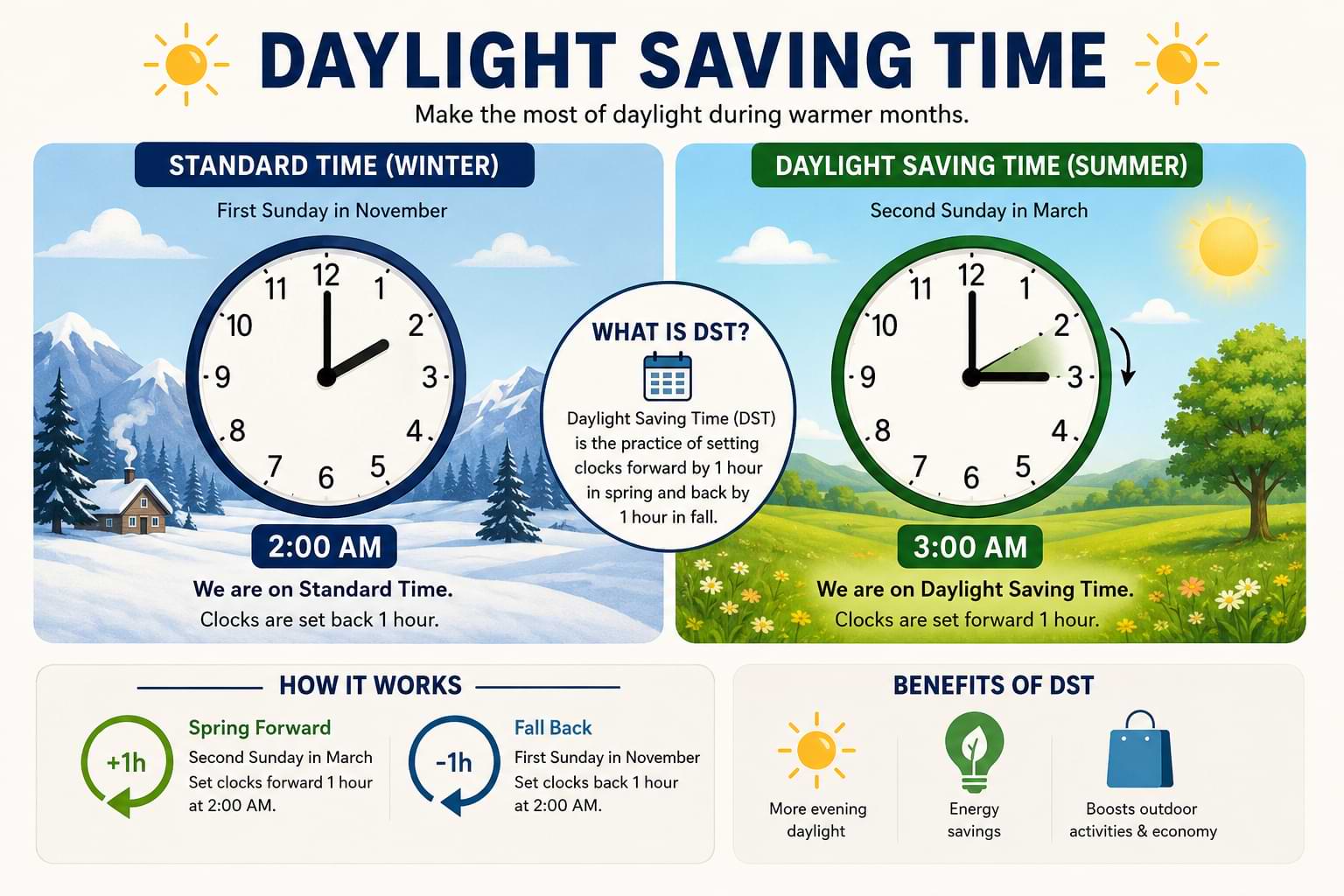
GMT never changes for daylight saving. However, countries that use GMT as a standard wintertime zone often switch to a different time zone in the summer. For instance, the UK switches from GMT to BST (British Summer Time), which is UTC+1. Meanwhile, the UTC standard itself remains completely fixed and never adjusts for seasons.
Why the Difference Matters for Developers and System Administrators
If you are writing code, configuring servers, or managing databases, using the correct terminology—and code logic—is vital.
Modern operating systems, network protocols (like NTP), and databases run natively on UTC, not GMT.
The Leap Second Dilemma
Because UTC accounts for leap seconds to stay aligned with the Earth’s rotation, computers must occasionally account for a minute containing 61 seconds. GMT does not natively handle this technical adjustment; it simply stretches or shrinks slightly alongside the planet’s rotation.
🛠️ Developer Pro-Tip: Database Best Practices
Always store your timestamps in UTC within your databases (e.g., PostgreSQL, MySQL, MongoDB). Never store dates in local time zones or rely on GMT labels. Convert the standardized UTC timestamp to the user’s local time zone on the frontend application layer right before displaying it to the user.
Summary:
-
Use GMT if you are discussing the actual local time zone of people living in the United Kingdom, Ireland, or parts of Western Africa during the winter months.
-
Use UTC if you are discussing technical infrastructure, programming code, aviation schedules, military operations, or global time zone offsets.
By grounding your global operations in UTC, you ensure that your systems remain perfectly accurate to the nanosecond, completely independent of seasonal shifts or irregularities in our planet’s rotation.