
If you have ever heard or used the expression “once in a blue moon,” you know it stands for something exceptionally uncommon. But is it a full moon tonight, and what exactly is the science behind this legendary lunar phenomenon?
Despite its colorful name, a blue moon isn’t actually blue, nor is it as rare as the famous saying implies. In fact, a blue moon occurs like clockwork roughly every two to three years.
Below is your ultimate guide to tracking moon phases, calculating upcoming dates, and understanding when to look up at the night sky.
When Is the Next Blue Moon?
The precise moment the next full moon arrives is a single snapshot in time shared globally. However, because our clocks are split into different regional time zones, the official calendar date of a blue moon can vary depending on your location.
Planning to view the moon tonight? Keep an eye on local moon phase today applications to track exactly when it hits 100% maximum luminosity.
What Is a Blue Moon?
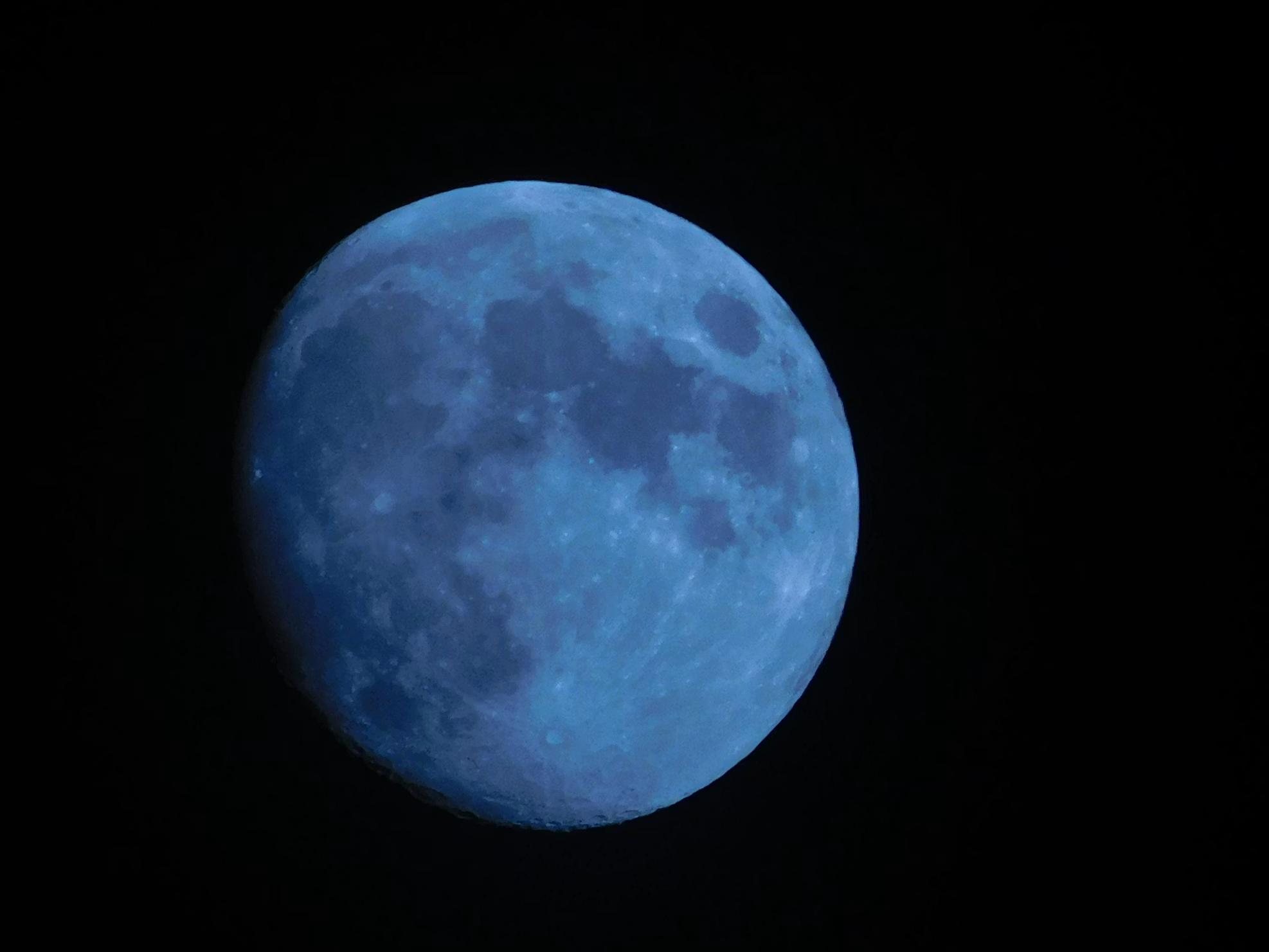
Historically, cultures around the world—including Native American tribes—kept track of changing seasons by giving descriptive names to every full moon in 2026. For example, the full moon in January is known as the “Wolf Moon”. To understand how all twelve lunar cycles are tracked across different cultures and histories, explore our comprehensive guide on traditional full moon names. Because there are 12 months in a standard calendar year, we typically expect to see exactly 12 full moons annually.
However, a complete cycle of the moon phases takes approximately 29.5 days to finish. This means 12 full lunar cycles require only 354 days total.
Because this falls 11 days short of the 365 or 366 days in a standard calendar year, the remaining days accumulate over time. Roughly every two and a half years, an extra 13th full moon slips into the solar year. Because this extra moon doesn’t match the traditional 12-month naming schemes, it is called a “Blue Moon.”
Today, astronomers use two distinct definitions to classify it:
Definition 1: The Monthly Blue Moon
This is the modern definition that most people search for. A monthly blue moon is the second full moon to appear within a single calendar month, containing two full moons. Because February has only 28 or 29 days, it is shorter than a full lunar cycle, meaning a monthly blue moon can never happen in February.
Definition 2: The Seasonal Blue Moon
This is the traditional, original definition of the phrase. A seasonal blue moon is the third full moon in an astronomical season that contains four full moons instead of the customary three. Astronomical seasons are measured strictly by the planetary movements between solstices and equinoxes.
Where Does the Name “Blue Moon” Come From?
If you search the night sky during the full moon, you won’t see a color change. The origin of the actual name remains a mix of old language and a famous media mistake:
-
The Word for Betrayal: Etymologists trace the word back to the obsolete Old English word “belewe”, which meant “to betray”. An extra moon was said to “betray” the standard calendar, making it difficult for clerical workers trying to calculate the variable timing of Lent and Easter using standard moon phases.
-
The Trivial Pursuit Error: The popular monthly definition (the second full moon in a month) actually started as a misinterpretation by amateur astronomer James Hugh Pruett in a 1946 edition of Sky & Telescope magazine. The mistake spread through radio programs and eventually became a certified answer in the 1986 edition of the board game Trivial Pursuit! Today, it is fully recognized as an official second definition.
Double Blue Moons and Black Moons
When February completely misses out on having a full moon (an event called a Black Moon), the leftover moon cycles spill directly into January and March.
This creates a spectacular, highly unusual phenomenon known as a Double Blue Moon, where both January and March experience two full moons each in the same calendar year. Double Blue Moons only occur three to five times per century. The world last witnessed a Double Blue Moon in 2018, and it won’t happen again until 2037.
What Colour Is a Blue Moon Tonight?
When you step outside to check if it is tonight a full moon, a Blue Moon will look like any other standard full moon—displaying its regular brilliant pearly-gray and bright white colors. However, there are two distinct exceptions:
-
Blood Red Blue Moons: If a Blue Moon aligns perfectly with a total lunar eclipse, the Earth’s atmosphere filters out blue wavelengths and projects bent red light onto the moon’s surface, turning it a deep copper or blood-red color.
-
True Atmospheric Blue Moons: On incredibly rare occasions, a full moon tonight can look physically blue or teal to the human eye. This is an atmospheric optical illusion caused by major volcanic eruptions or intense forest fires. If the sky fills with smoke or ash particles of a specific size, they scatter red light away while allowing blue light to pass straight through, giving the moon a striking blue hue.
FAQ?
How can I verify if it is a full moon tonight?
To see if there is a full moon tonight, you can reference a daily updated moon phase today index. The moon is technically only “full” for the specific minute it sits 180 degrees directly opposite the sun, though it looks perfectly round to observers for roughly 24 hours before and after.
When is the full moon in May 2026?
The full moon in May 2026 officially peaks at 08:45 UTC on May 31, 2026. If you live in a time zone that is 9 or more hours behind UTC (such as Honolulu), your local peak illumination will actually fall on the evening of May 30, 2026.
Why do blue moon dates differ by region?
Because time zones differ across the globe, a full moon that peaks early in the morning on the 1st of a new month in Europe might still occur late at night on the 30th or 31st of the previous month in the Americas. This means one country can experience a blue moon while another observes it as a normal monthly cycle!